 By
By 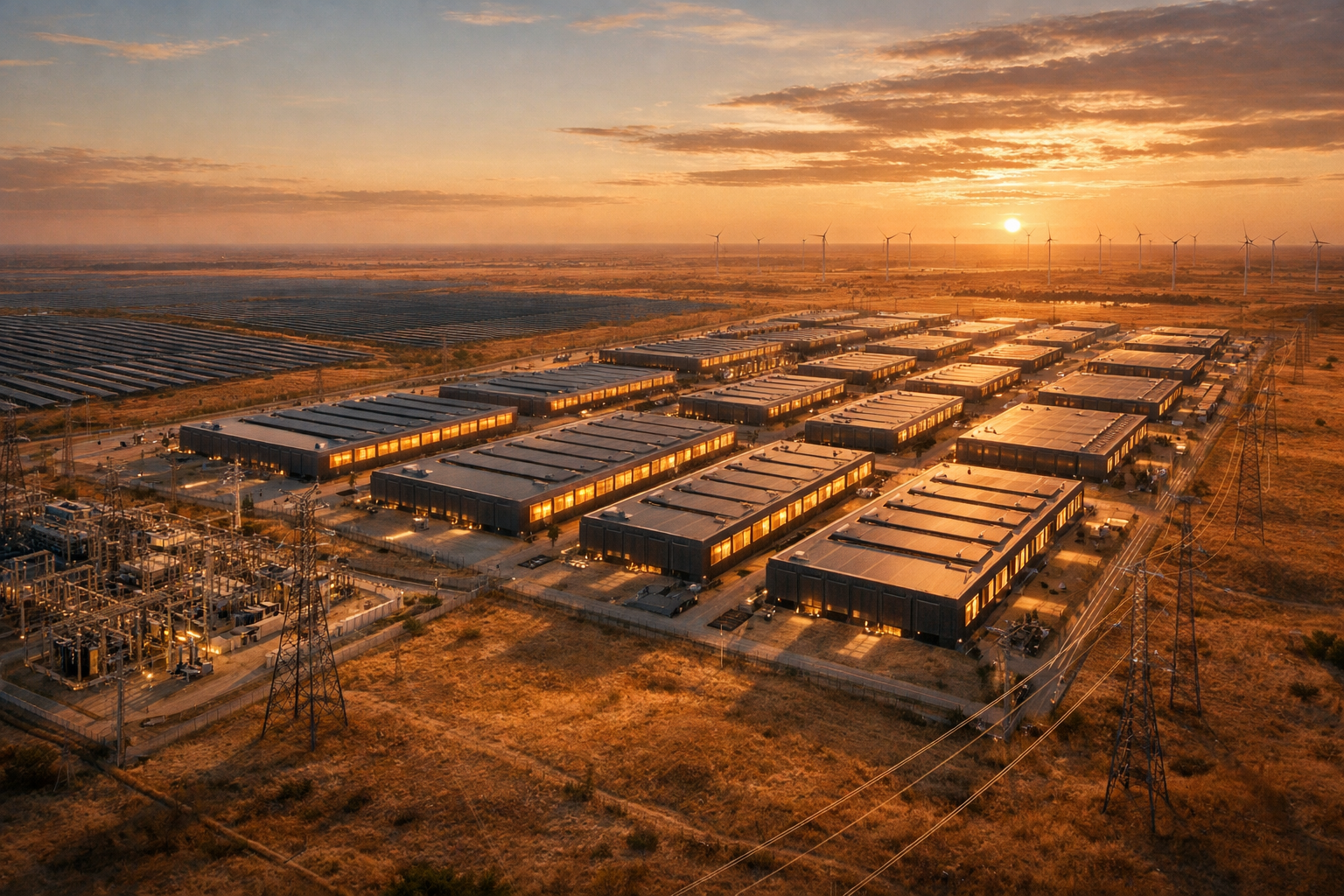
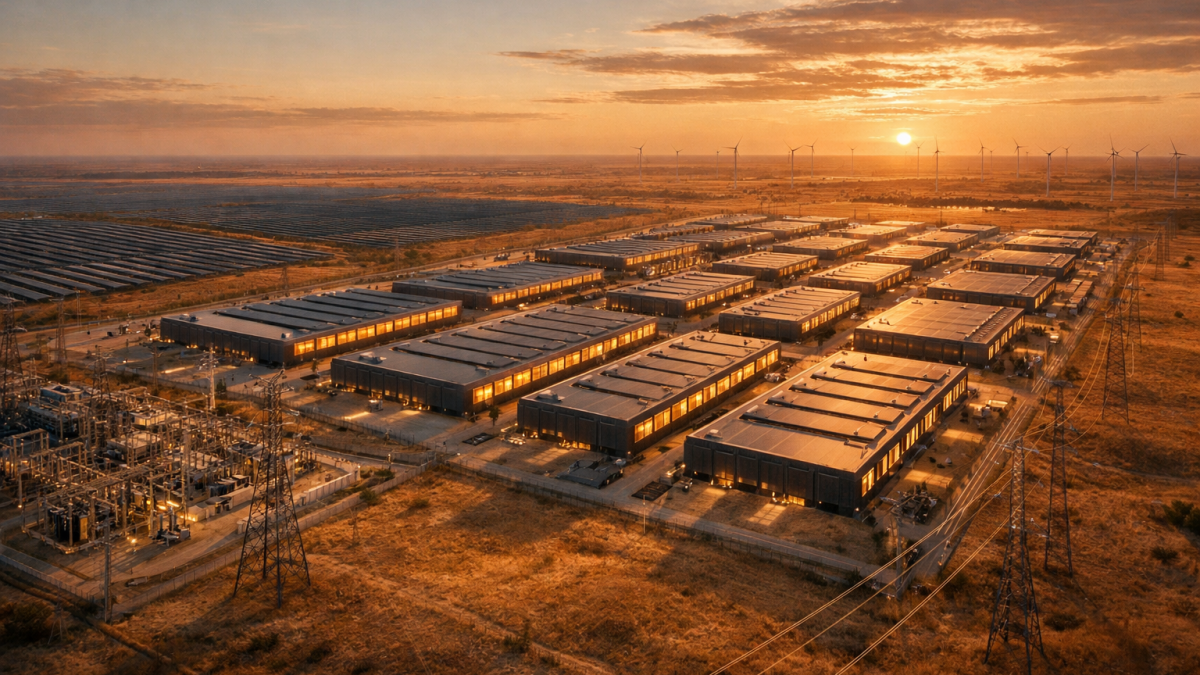
OpenAI and SoftBank announced a joint $1 billion investment in SB Energy on Friday to build and operate a 1.2-gigawatt data centre in Milam County, Texas.
On the surface, it reads like yet another megadeal in the booming AI infrastructure arms race.
But it signals something more urgent: electricity has become AI’s single largest production bottleneck.
Without solving the power problem, no amount of capital, chips, or code will matter.
The economics are stark. A single gigawatt of continuous power supplies roughly 750,000 American homes.
Yet data centres are now clustering these demands in concentrated geographic zones, straining grids that were designed for steady, predictable industrial loads decades ago.
Between 2017 and 2023, data centre electricity demand more than doubled, driven almost entirely by AI-accelerated servers.
Lawrence Berkeley National Laboratory, operated by the US Department of Energy, estimates that data centre consumption will reach between 325 and 580 terawatt-hours by 2028, up from 176 TWh in 2023.
AI alone could account for 35 to 50% of all data centre power use by 2030, driving electricity demand that the International Energy Agency projects will exceed 250 TWh in the United States by 2026.
Why power is AI’s hidden chokepoint
This growth trajectory exposes a hard truth: most American electrical grids cannot absorb this load. Grid interconnection queues now stretch seven years in some regions.
Utilities typically project demand in years, not months. Yet AI data centre projects announce gigawatt-scale builds on quarterly timelines.
The result is gridlock, not shortage, but misalignment between infrastructure build cycles and AI deployment speed.
The OpenAI–SoftBank investment sidesteps this bottleneck by securing dedicated generation.
SB Energy, a SoftBank subsidiary, is building “powered infrastructure” for the 1.2-gigawatt Milam County site, meaning it will secure or develop a power supply in advance of construction.
This is not a novel strategy; major cloud operators have been pursuing on-site generation and dedicated renewables contracts for years, but the scale and speed are unprecedented.
The $1 billion reflects the capital intensity: reliable, AI-grade power requires upfront investment in generation assets, transmission interconnects, and battery storage that utility-scale capex cannot keep pace with.
What the deal means for markets and policy
Tactically, the partnership locks in three critical advantages: stable, long-term power pricing independent of volatile wholesale markets; faster site commissioning by pre-securing grid access; and reduced regulatory risk through private coordination rather than utility-led coordination.
SB Energy becomes both developer and infrastructure provider, collapsing the permitting and construction timeline by months.
The broader implication is market-shaping. Hyperscalers are signalling that grid constraints, not capital scarcity, will determine AI infrastructure deployment.
This reshapes investment logic across renewable energy, battery storage, and transmission. Wind and solar developers near data centre clusters gain immediate offtake demand.
Regional transmission operators face pressure to prioritize data centre interconnections over traditional industrial or residential projects.
Local regulators, already overwhelmed by proposal volume, now confront concentrated power demands from well-capitalized tech firms with explicit White House backing.
The post This $1B OpenAI–SoftBank bet reveals what AI can’t function without appeared first on Invezz
